Insights on digital health and preventive medicine
Clinical reflections, evidence and a vision for the future. From the IKI Health team for professionals who want to lead the change.
The Longevity Paradox: Investing in the Peak of the Pyramid While the Foundation Crumbles
The longevity industry is pouring billions into advanced molecular diagnostics, cellular reprogramming, and next-generation wearables. But the epidemiological evidence — from McGinnis and Foege's study to the County Health Rankings model — shows that up to 80% of health outcomes depend on behavior, environment, and social factors, not cutting-edge clinical care. For women over 40, healthspan isn't won in a cryotherapy chamber: it's won in sleep, metabolic flexibility, and stress management, day after day. This article reviews the evidence behind this investment paradox and makes the economic case for scaling lifestyle-based prevention.
Read full article →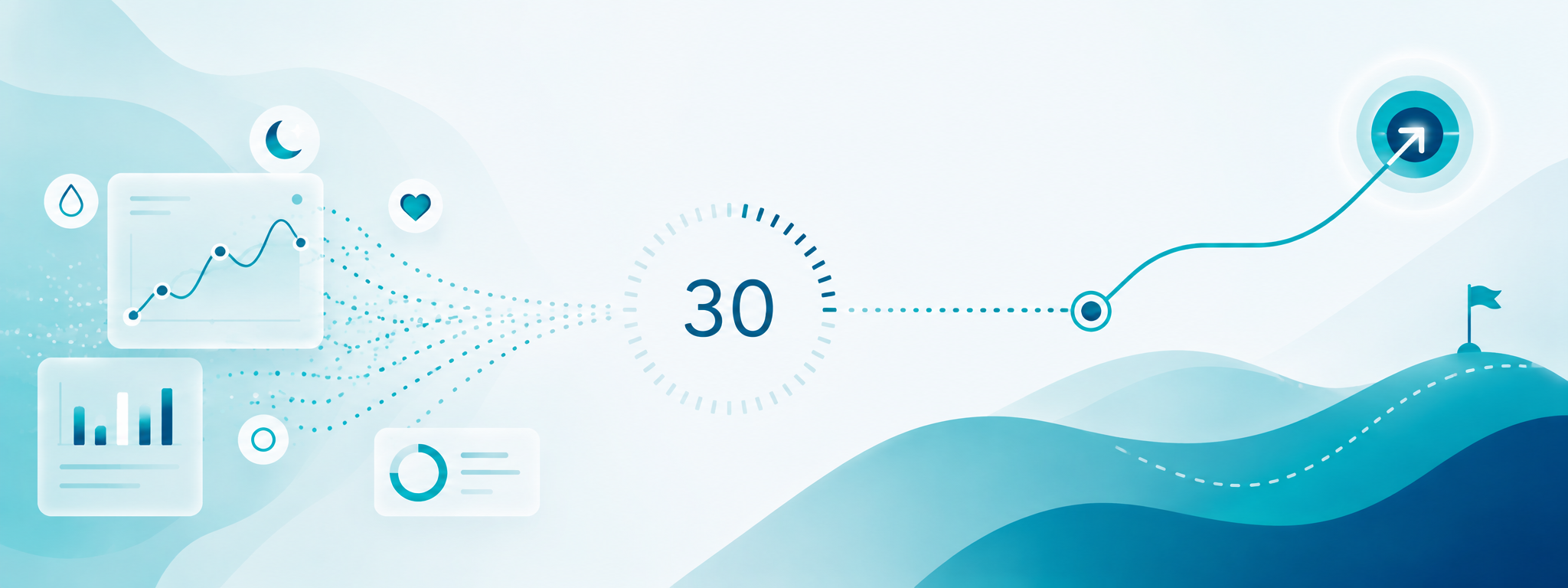
The Missing Layer: Why Better Measurement Isn't Enough to Change Behavior
Digital health has become extraordinarily good at measuring: glucose, sleep, and diagnostics that are faster and more continuous than ever. But measurement was never the hard problem. It happens in the 30 seconds between seeing the data and deciding what to do. This article reviews the science — from Eysenbach's law of attrition to the COM-B model and just-in-time adaptive interventions — to explain why adherence remains stagnant despite the data explosion, and makes the case for investors and founders: build the behavioral infrastructure that turns data into action at the moment it matters.
Read full article →
The Clinical Snapshot Isn't Enough: Why Real Health Happens Between Visits
Most clinical decisions are made from a single point-in-time snapshot: weight, lab results, symptoms, and whatever the patient remembers. But the evidence — from Stone et al.'s study on patient diaries to white coat hypertension and glycemic variability hidden behind a single HbA1c — shows that retrospective recall systematically distorts the clinical picture. The time between visits isn't dead time: it's where the most valuable information happens. This article reviews that evidence and makes the case for how continuous monitoring with AI can give clinicians real data, not memory-reconstructed snapshots.
Read full article →
The Hidden Cost of Perimenopause: Why Companies Are Losing Their Best Leaders
More than 30 senior women told Fast Company how perimenopause affected their performance and whether they stayed in their jobs. It's not a coincidence: the average age of menopause (51-52, The Menopause Society) overlaps with peak leadership years. Neuroscientific evidence (JAMA, 2020) confirms brain fog is real and measurable. And the cost is quantifiable: a Mayo Clinic Proceedings study (2023) documents billions in absenteeism, while the CIPD (2023) reports 10% of women have left a job over their symptoms. This article reviews that evidence and makes the case for what organizations can do to stop losing their best senior female talent.
Read full article →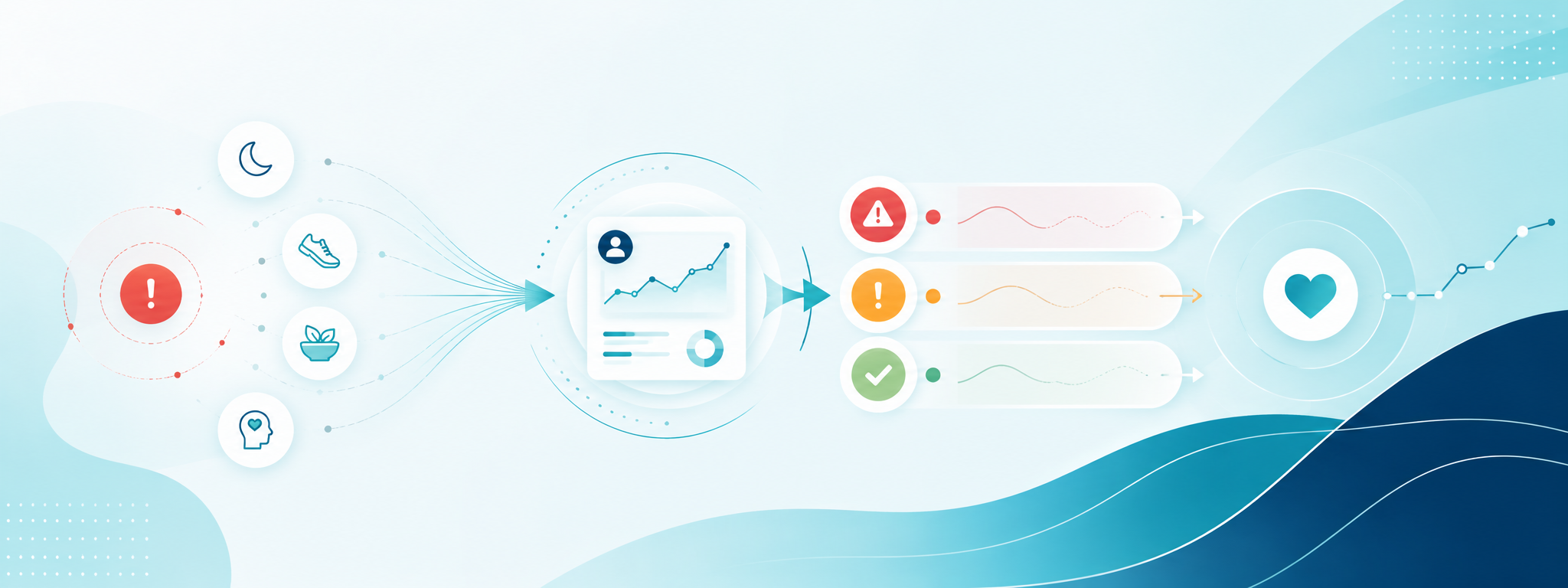
From reactive to proactive care: prioritizing patient follow-up with data
In patient follow-up, one of the biggest challenges is not doing more, but knowing who to attend to first. This article explores how a dynamic status (Red, Orange, Green) helps prioritize clinical attention based on key indicators — sleep, exercise, nutrition, and emotional wellbeing through FeelTrack™ — and how alerts for prolonged high-risk states enable earlier intervention. We also review the evidence on remote monitoring, treatment adherence, and lifestyle medicine behind this shift from reactive to proactive follow-up, without ever replacing clinical judgment.
Read full article →