
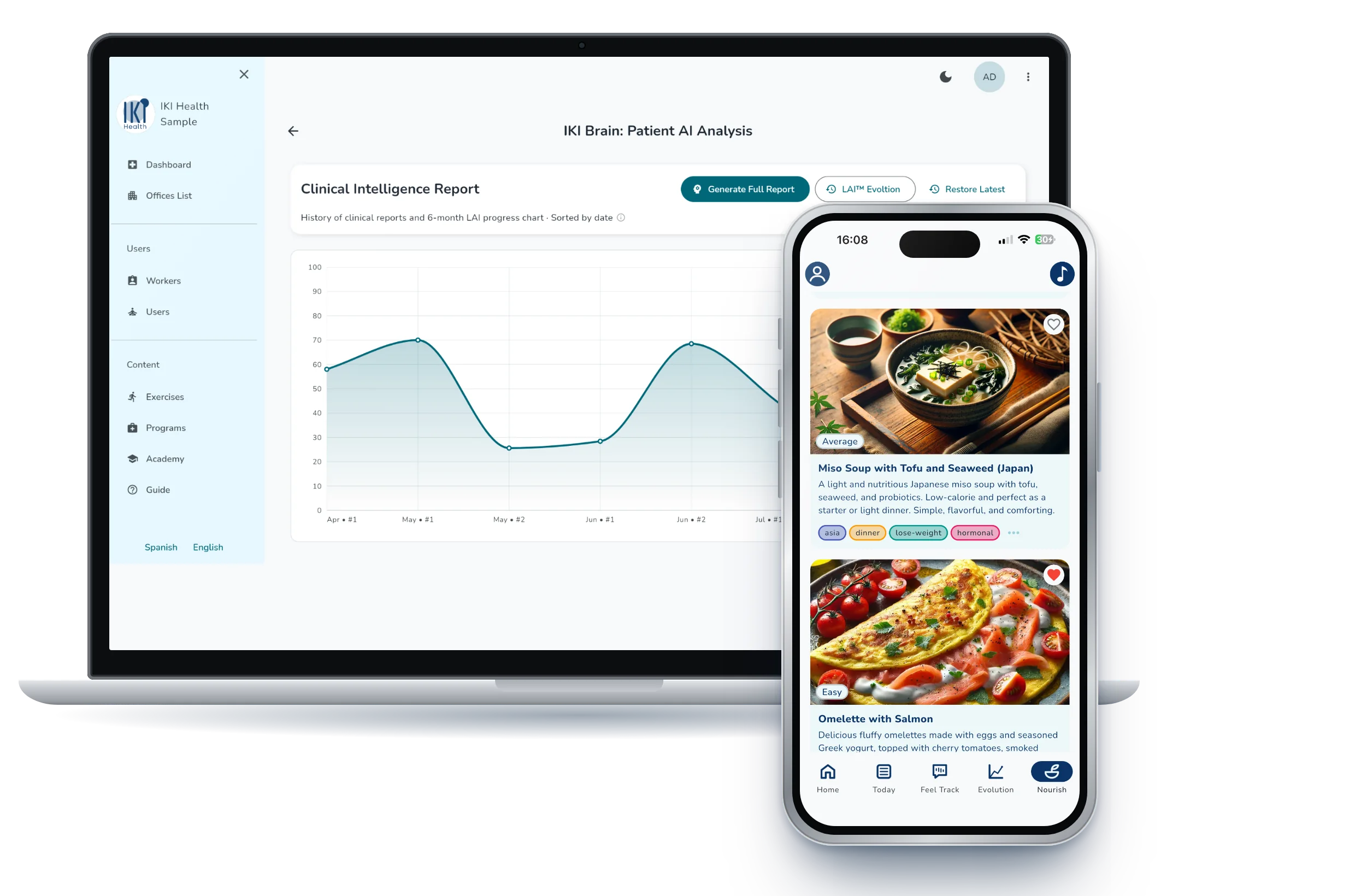
What the professional sees
- 1L.A.I.™ trend over the last six months.
- 2Full report on demand, reviewed by the clinician before any decision.
A longitudinal adherence score — not a diagnosis.
It summarises from 0 to 100 how someone has followed their plan over the last two weeks: consistency, tasks and self-monitoring. Each week it helps you get ahead of drop-out.
What it shows
- A 0–100 score per report
- Its trend over the last six months
- Whether adherence is improving, stable or declining
What it is not
- Not a diagnosis
- Not a validated clinical risk score
- Not a substitute for clinical assessment
How she feels, in her own words.
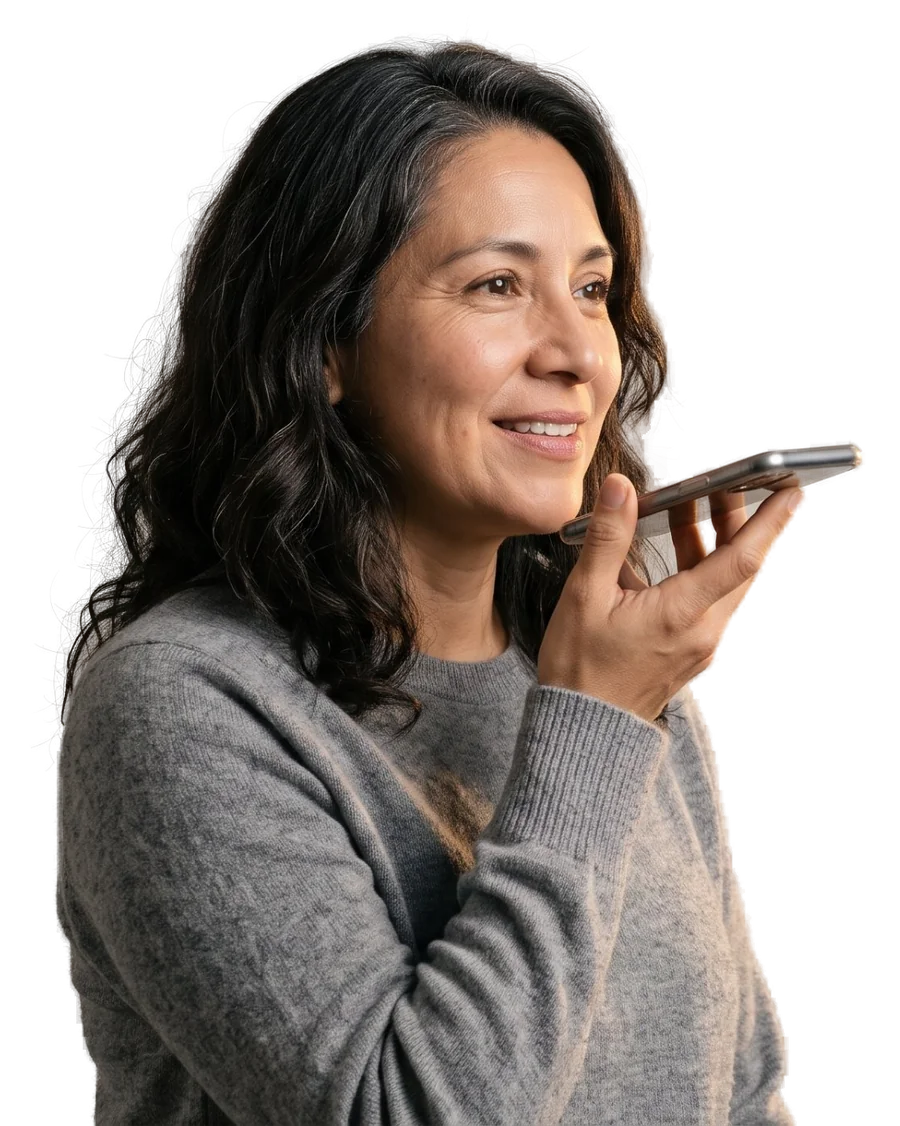
She says or writes how she feels. IKA, IKI’s assistant, returns her stress level, main emotions and a recommendation. The professional sees how they evolve.
32%stress level
Main emotions- Serenity 41%
- Fatigue 27%
- Gratitude 18%
- Anxiety 14%
- Deterministic AI
- Anonymized and tokenized
- She decides
- Indicative, not a diagnosis
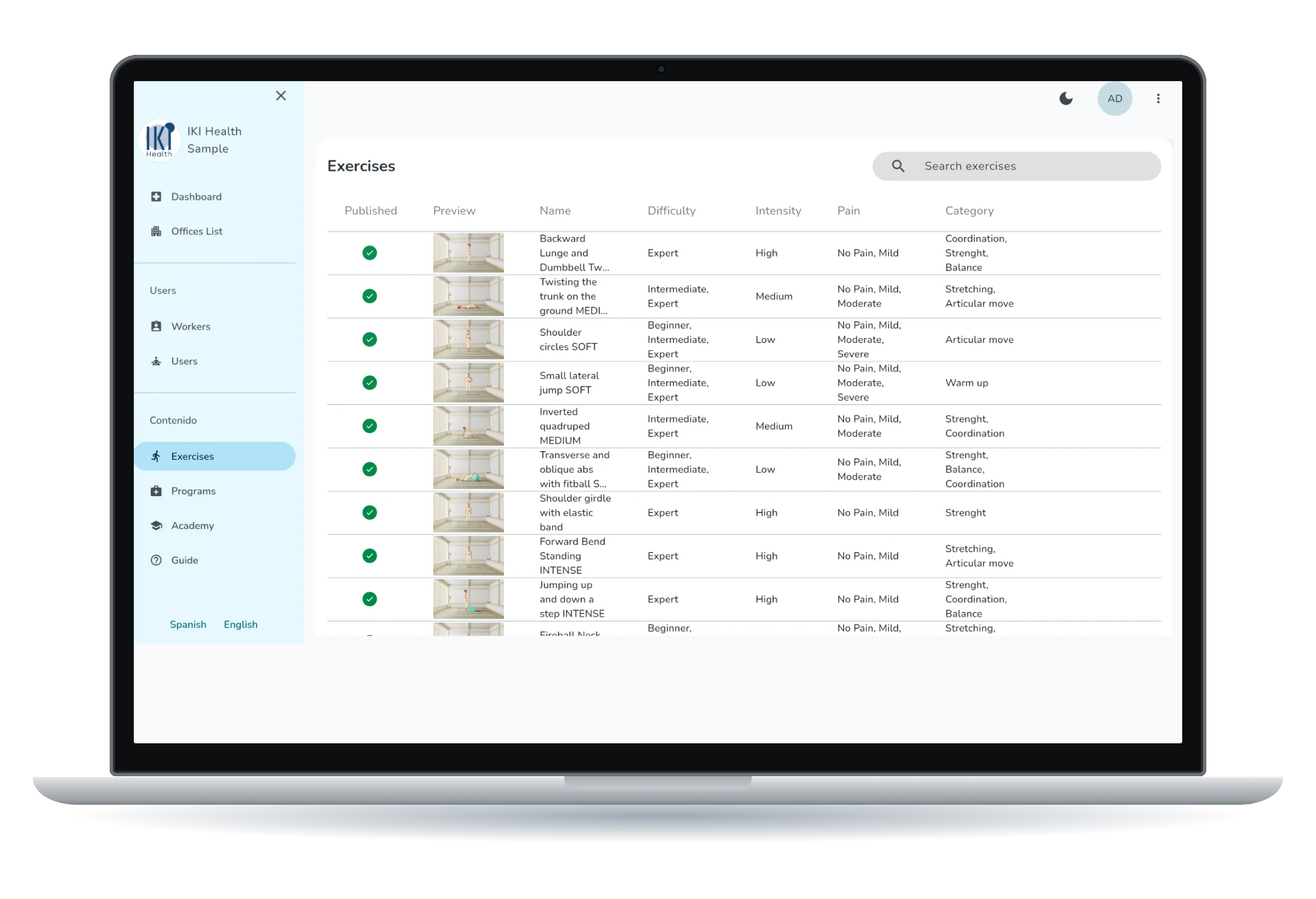
A library the clinician assigns.
Guided movement videos, recipes by goal, Academy articles and stress-relief sounds. The professional chooses what to assign.
Responsible use and health data.
Responsible use
- IKI does not diagnose or prescribe treatment.
- Clinical decisions always stay with the clinician.
- Future capabilities will be announced when they are available and validated.
Health data
- Processed with her explicit consent.
- Encrypted in transit and at rest, with restricted access.
- Visible only to her and her authorized clinicians.
- In B-Healthy™, employers receive aggregate group results only.
Questions about the technology
What each tool does, what it doesn’t, and what is validated.
L.A.I.™ is an IKI Health score that summarizes, from 0 to 100, how someone has followed her habit plan over the last two weeks, based on consistency, completed tasks and self-monitoring. Clinicians see its trend in the dashboard and, every week, how adherence is going, so they can act before she drops out.
It is not a diagnosis and not a validated clinical risk score.
FeelTrack™ is the emotional check-in in the IKI app. She says or writes how she feels, and IKA, IKI’s assistant, analyzes not only what she says but how she says it: it returns her stress level from 0 to 100%, the main emotions it recognizes and a simple recommendation. Her clinician sees how her stress and emotions trend over time.
It runs on deterministic AI, which always gives the same reading for the same input, and all information is anonymized and tokenized. It is a follow-up tool, not a diagnostic one.
IKI Brain is the analysis module in the IKI Health clinician dashboard. It generates follow-up reports for each client and shows her L.A.I.™ trend over the last six months, so the clinician can prepare the visit and decide.
Today it supports follow-up with the clinician in charge. Future capabilities will be announced when they are available and validated.
No. IKI organizes what a woman logs so her clinician can decide. Clinical decisions are always made by people.
Sleep, pain, stress, energy, mood and activity in a daily check-in — and, if she wants, how she feels by voice or text with FeelTrack™. She also follows her plan: daily activities, guided exercise and content.
Health data is processed with the woman’s explicit consent, in line with the GDPR and Spain’s LOPDGDD, encrypted in transit and at rest, with restricted access. Only she and her authorized clinicians can see it. In B-Healthy, employers receive aggregate results only.
No. They are real platform screens using a sample account with example data.